Dobry Start PLN 300 for a foreigner’s child: is a residence card enough?
Foreigners with legal stay may apply for the PLN 300 school start allowance, but new conditions have applied since 1 July 2026 and not everyone has to meet them in the same way. We check who will receive the benefit, what role work plays and by when to apply. Original material by the eKartaPobytu editorial team.
Legal state as of 17 October 2026. The Polish version is the source version.
What Dobry Start is and who is entitled
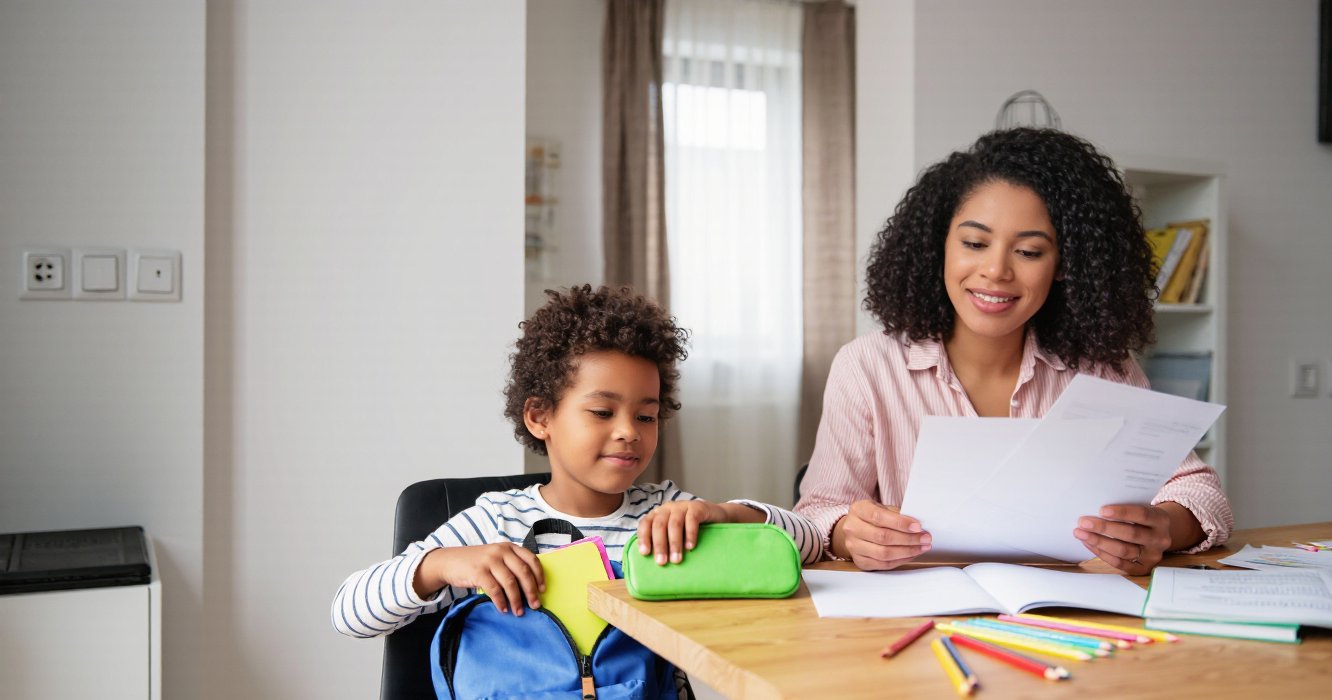
Dobry Start is a benefit of PLN 300 once a year for a pupil’s school start, regardless of the family’s income. It is paid for a child studying at school up to the age of 20, or up to 24 in the case of disability. The benefit is exempt from tax and cannot be seized by a bailiff.
The application is made by a parent or guardian of the child. If both parents care for the child, one application is enough; if both apply, the benefit goes to the one who applied first.
Will a foreigner get PLN 300? It depends on citizenship and work
The new rules apply to citizens of third countries (outside the EU/EFTA and the United Kingdom) and to citizens of Ukraine with UKR status. Since 1 July 2026 the Council of Ministers regulation of 26 June 2026 (Dz.U. 2026 poz. 866) has made the award of Dobry Start dependent on professional activity in Poland. This applies to applications for the 2026/2027 school year.
A foreigner must therefore meet all of the following: legal stay in Poland, residence with the child in Poland and the professional-activity condition. A residence card alone is not enough.
According to the ministry, the professional-activity condition is met by persons who carry out the types of activity defined in the Act on State Aid in Raising Children or who are covered by health insurance in the month preceding the month of the application. This is the same definition as in the 800+ programme. In 800+ ZUS treats as professional activity, among others, work under an employment contract or a contract of mandate and running a business, with compulsory pension and disability insurance, and in most cases the contribution base must be at least 50% of the minimum wage.
The professional-activity condition does not apply, among others, when the application concerns a child who is a Polish citizen or a child with a disability certificate, or when an adult student applies independently. Citizens of Ukraine with UKR status must additionally show that the child is studying in a school belonging to the Polish education system in the given school year.
An example from practice
Example (illustrative, prepared by the editorial team): a third-country national has a residence card and works legally under an employment contract, and the child lives with them and attends primary school in Warsaw. The person meets the conditions: legal stay, residence with the child and professional activity, so they may apply for PLN 300. If the same person did not work and was not covered by health insurance in the month preceding the application, the professional-activity condition would not be met despite a valid residence card.
How to apply and by when
The application is submitted only electronically: through the mZUS app, the eZUS portal, the Emp@tia portal or online banking. Foreigners may use online banking and Emp@tia if both the parent and the child have PESEL numbers. The application states, among other things, a bank account number, an e-mail address and a telephone number. ZUS requests and decisions are delivered to the account in the eZUS portal.
Applications can be submitted from 1 July to 30 November, in 2026 until 30 November 2026. An application submitted by the end of August guarantees payment by 30 September at the latest, and one submitted later is processed by ZUS within 2 months of the day the application is submitted together with the documents. A negative decision can be appealed to the President of ZUS, and then a complaint can be lodged with an administrative court.
Other benefits working foreigners may count on
Besides Dobry Start, foreigners with legal stay who work legally may apply, among others, for the 800+ child-raising benefit and for the “active parents at work” benefit (the so-called babciowe). In 800+ third-country nationals must have legal stay with access to the labour market and meet the professional-activity condition from the new benefit period that began on 1 June 2026, and the child must fulfil the schooling obligation in the Polish education system. The “active parents at work” benefit is PLN 1,500 a month per child aged 12 to 35 months, if the parent is professionally active and the child does not attend a nursery or kindergarten; the foreigner attaches to the application a document confirming legal stay with access to the labour market, for example a residence card. It is not available to citizens of Ukraine with UKR status. Each benefit has its own deadlines and conditions, which ZUS provides.
- ZUS — Dobry Start programme (in Polish)
- Council of Ministers regulation of 26 June 2026, Dz.U. 2026 poz. 866 (in Polish)
- Council of Ministers regulation of 15 June 2021, Dz.U. 2021 poz. 1092 (in Polish)
- MRPiPS — New rules for granting the child-raising benefit to foreigners (in Polish)
- ZUS — Changes in the child-raising benefit, Rodzina 800+ (in Polish)
- ZUS — “Active parents at work” benefit (in Polish)
- Gazeta Prawna — Cudzoziemcy mogą ubiegać się o wyprawkę szkolną 300+ (in Polish)
What this means for you
- You are a third-country national with a residence card — the card alone is not enough: since 1 July 2026 you also need professional activity (or health insurance in the month preceding the application), legal stay and residence with the child in Poland.
- You work legally under an employment contract, a contract of mandate or run a business — contributions paid to ZUS confirm professional activity; in 800+ ZUS in most cases requires a contribution base of at least 50% of the minimum wage.
- Your child studies at a Polish school — apply electronically by 30 November 2026 at the latest (mZUS, eZUS, Emp@tia or a bank); in online banking and Emp@tia you need the PESEL number of yourself and of the child.
- You are a citizen of Ukraine with UKR status — in addition, the child must study in a school belonging to the Polish education system in the given school year.
When it's worth asking a legal adviser
If your situation differs from the typical case, you have received a letter from an office, or you are not sure which procedure applies to you — briefly describe your case on WhatsApp. We will point you to the right path and the source where you can confirm the details.
Tick the consent box to continue to WhatsApp.
The content is for informational purposes only and does not constitute individual legal advice. Every administrative matter depends on its individual facts — before acting, confirm the information at the official source or consult an authorised representative.